
Last updated September 10, 2026
Full 25-point door and opener safety check with every visit - springs, cables, rollers, tracks, and your LiftMaster or Chamberlain opener included
You get a price before we start. It does not change when the truck arrives.
 Before
 After
After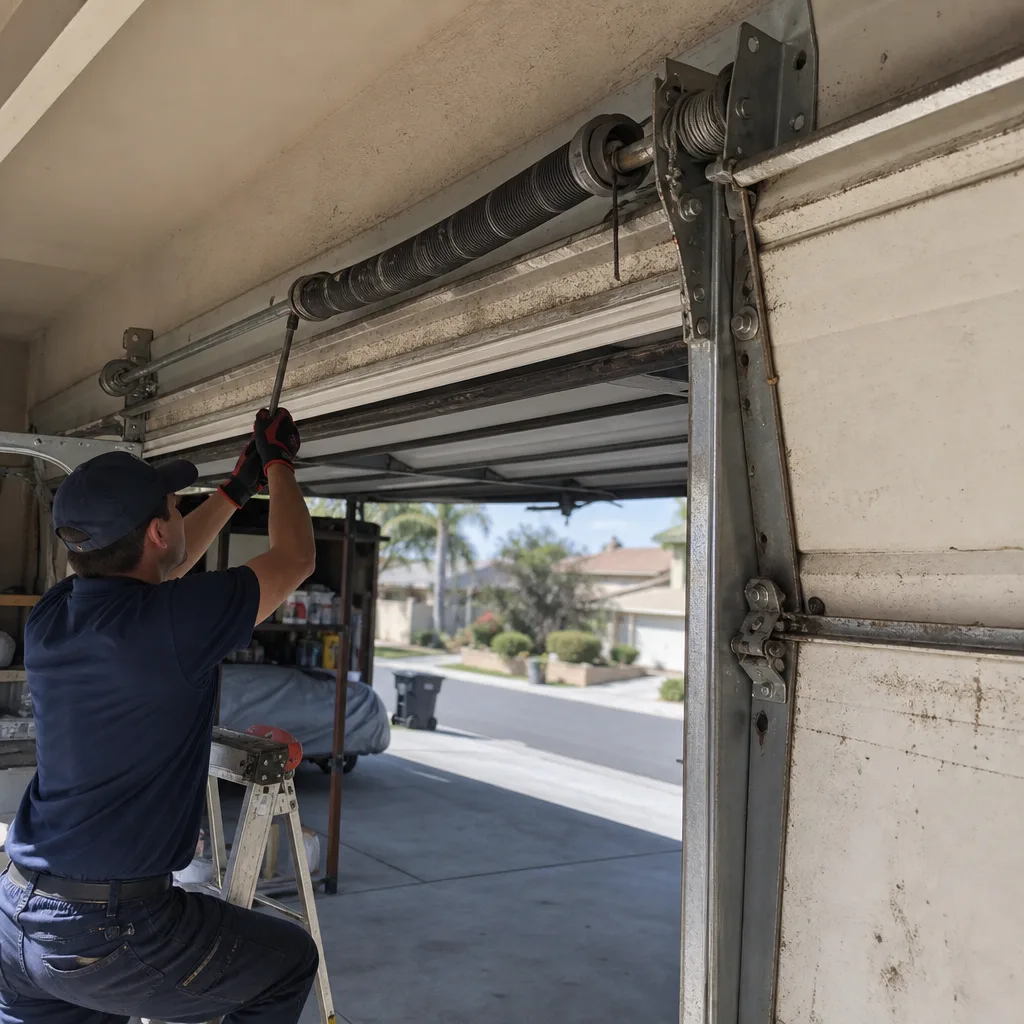 Before
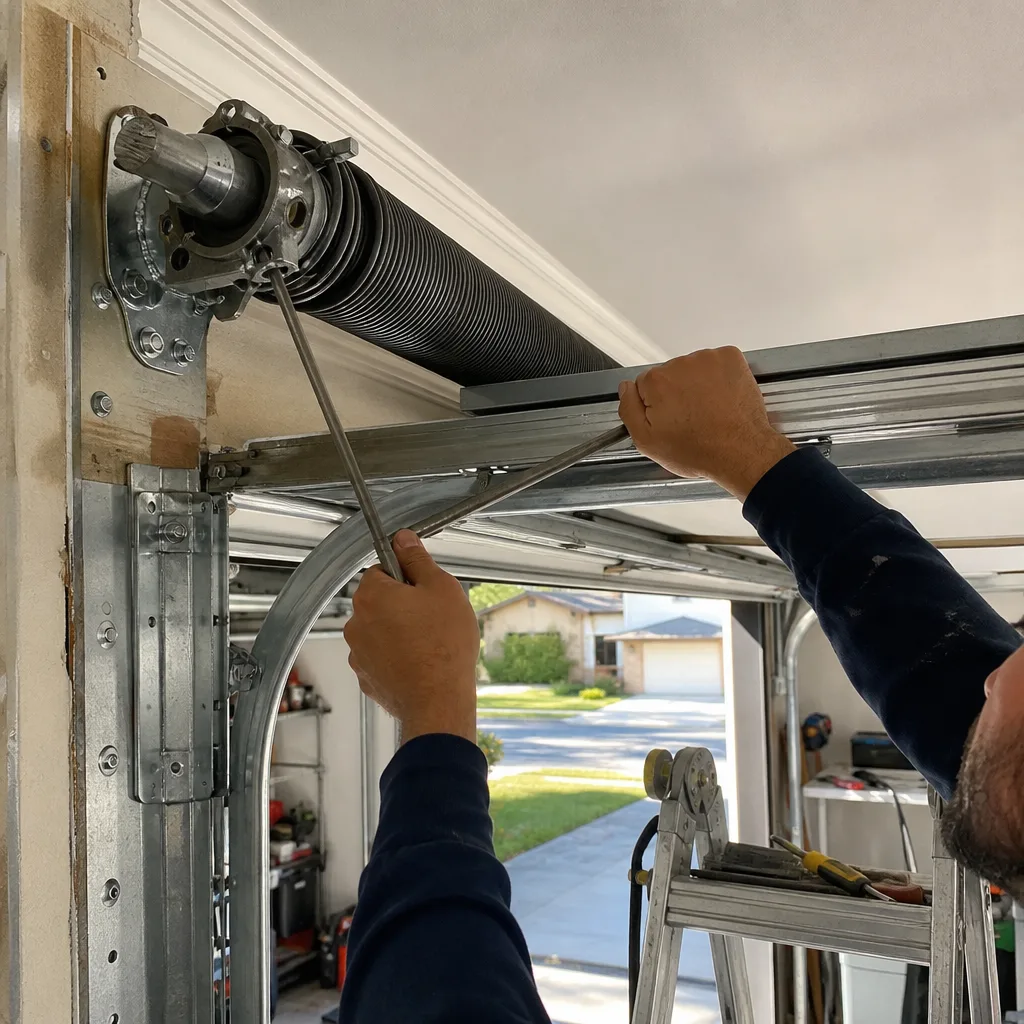 After
After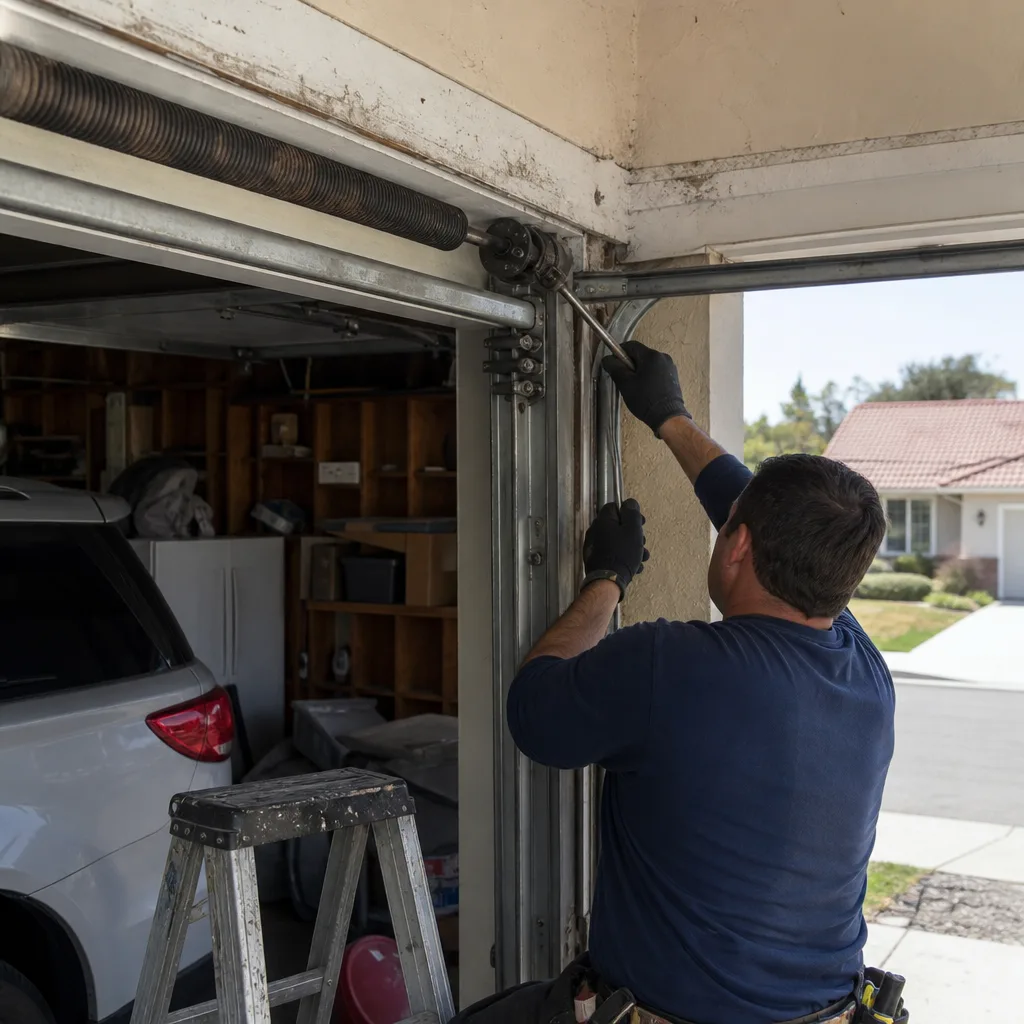 Before
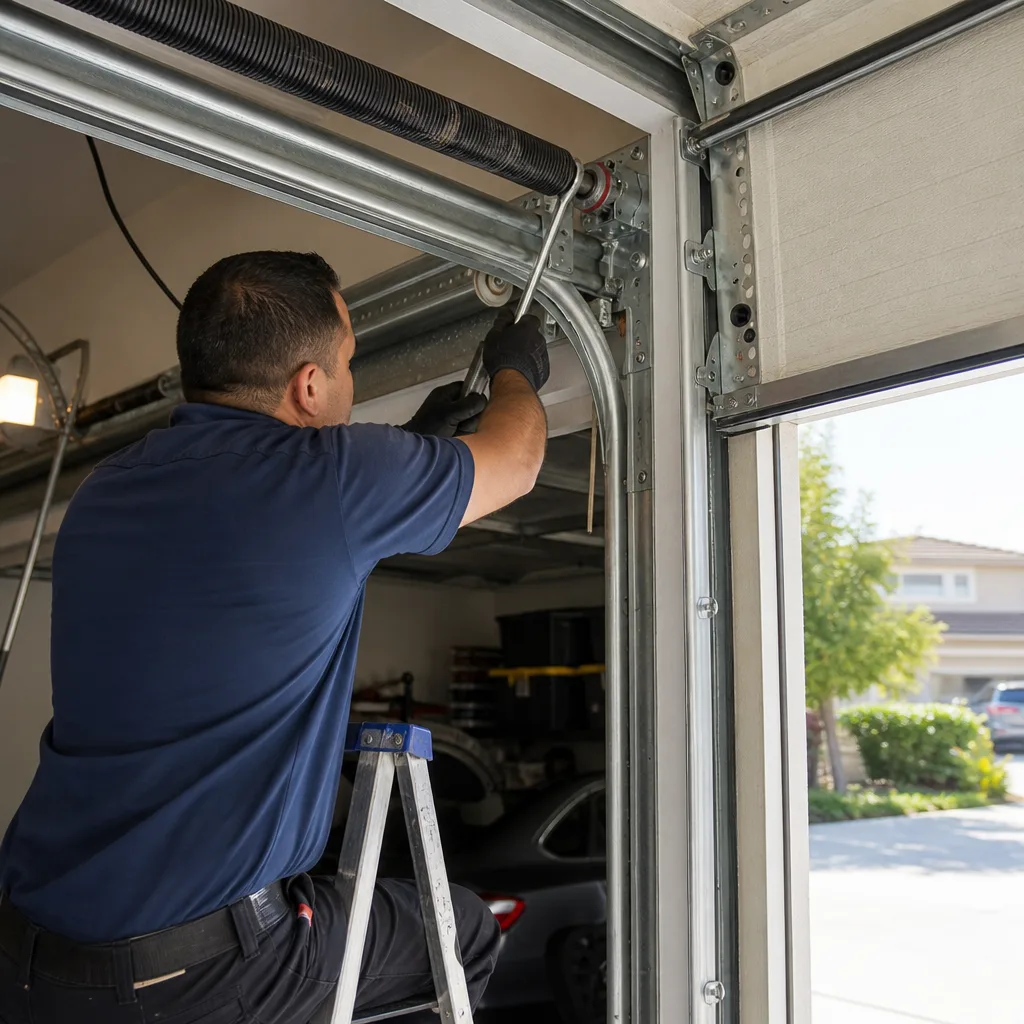 After
AfterDIY vs Professional Garage Door: The Mission Viejo Homeowner’s Decision Guide
Torsion springs store enough energy to break a wrist or an arm in the time it takes to blink. The internet has 200 tutorials on how to replace them yourself, and hospital ERs in Orange County see the results of those tutorials every year. But not every garage door task carries that danger. Some jobs are genuinely DIY-appropriate, and knowing the difference can save you money without costing you a trip to the emergency room. In this guide and our Garage Door Repair Maintenance Checklist for Mission Viejo Homeowners, we’ll draw the line with precision: which tasks belong in your hands, which belong in a trained technician’s, and how to tell the difference before you open a single YouTube tutorial. This is written for Mission Viejo homeowners who plan to stay in their homes and want a square deal on work done right.
Quick Answer
Most Mission Viejo homeowners can safely handle lubrication, sensor alignment, remote programming, and weather seal replacement themselves. Torsion spring replacement, cable repair, track realignment, and opener motor work should always go to a trained professional. The dividing line is stored mechanical energy: if a failed part is under tension, the job belongs to someone with the right tools and training.
Table of Contents
- The Physics of Torsion Springs: Why One Task Stands Alone
- DIY-Appropriate Tasks: What You Can Safely Handle
- Professional-Only Tasks: Where the Risk Outweighs the Savings
- True Cost Comparison: Parts, Tools, and Your Time
- The Warranty Traps Most Homeowners Miss
- Three Questions to Ask Before You DIY
- Mission Viejo-Specific Factors: Climate, Codes, and Common Issues
- When DIY Mistakes Get Expensive
The Physics of Torsion Springs: Why One Task Stands Alone
A standard residential garage door weighs between 150 and 250 pounds. You can lift it with one hand when the springs are working because the springs are doing the actual work. They store mechanical energy through twisting tension, and a typical torsion spring holds roughly 10,000 foot-pounds of torque at rest. That is not a typo. For perspective, that is roughly the torque output of a compact car engine, concentrated in a coil of hardened steel above your head.
When a torsion spring breaks, it releases that energy instantaneously. The sound is often described as a gunshot. The broken ends can whip through the air with enough force to lacerate skin, break bone, or cause traumatic eye injury. This is not theoretical. Emergency departments at Mission Hospital Laguna Beach and Saddleback Memorial report garage door spring injuries annually, and the patients are almost always homeowners who attempted replacement without proper winding bars and training.
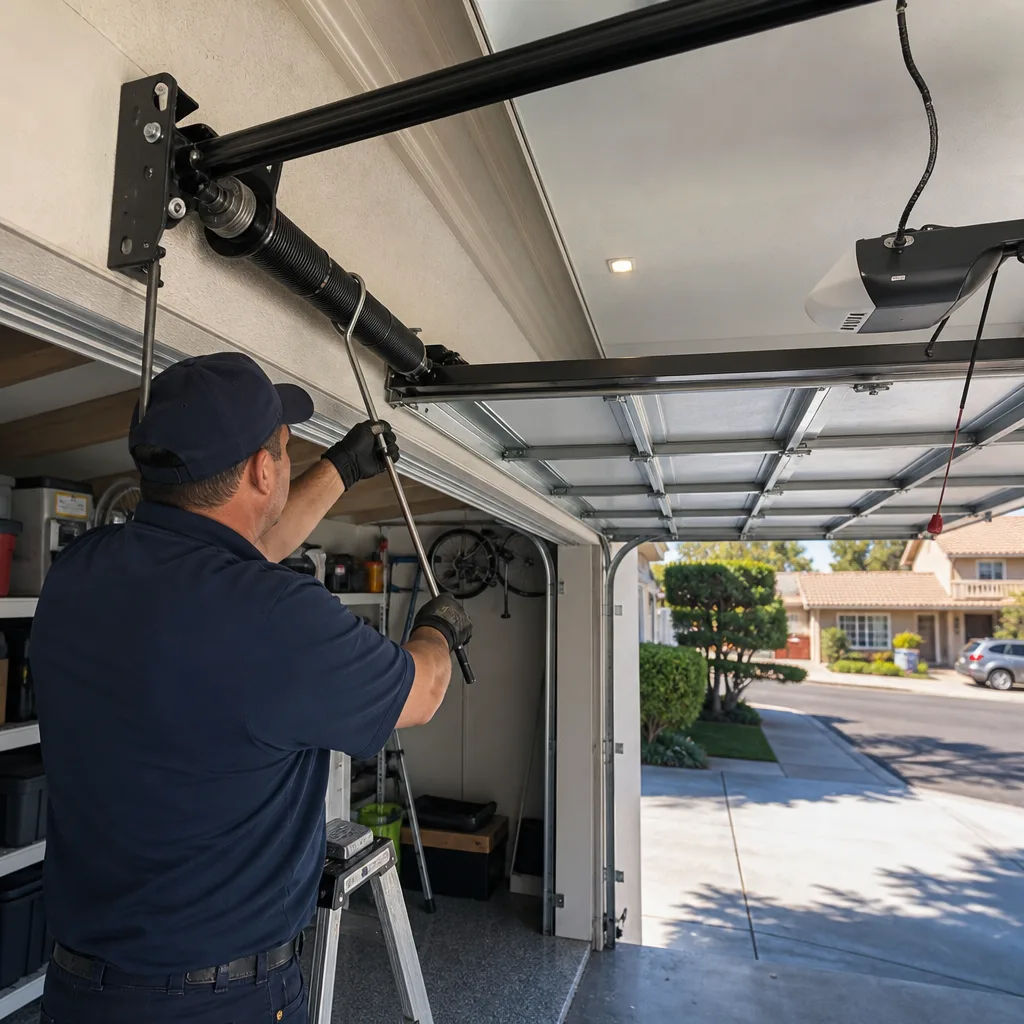
The danger is not the spring itself. It is the winding and unwinding process. To install a new torsion spring, you must add tension to the system using steel winding bars inserted into the cogs of the winding cone. One slip, one bar placed incorrectly, one moment of lost grip, and the full torque releases unpredictably. Professional technicians use calibrated torsion poles, safety glasses, and specific body positioning. They also know how to identify whether a door has a single or dual spring system, whether the springs are left-wound or right-wound, and whether the existing hardware can safely handle the replacement spring’s IPPT (inch-pounds per turn) rating.
Extension springs, found on older or lighter doors, carry less stored energy but present their own hazard: they stretch along the horizontal track and can snap free of their safety cables. If the safety cable is missing or frayed, the spring becomes a projectile. We have found extension springs without safety cables in homes throughout Mission Viejo, particularly in the older developments near Lake Mission Viejo built in the 1970s and 1980s.
This is why torsion spring replacement sits in a category by itself. It is not like painting a room or replacing a faucet washer. It is specialized mechanical work with genuine injury risk, and no amount of online tutorial watching substitutes for hands-on training under a journeyman technician.
DIY-Appropriate Tasks: What You Can Safely Handle
Not every garage door task involves stored energy. Several maintenance and minor repair jobs are well within the capability of a careful homeowner with basic tools. These tasks improve performance, extend component life, and cost little more than your time and a trip to the hardware store.
Lubrication and Basic Maintenance
Annual lubrication reduces noise, prevents rust, and keeps rollers moving smoothly along the track. Use a silicone-based spray lubricant on the hinges, rollers (not the bearings if they are sealed), and the top of the rail where the trolley travels. Avoid WD-40 for this; it is a solvent, not a lubricant, and attracts dust. In Mission Viejo’s dry, warm climate, dust accumulation is a real factor, particularly for homes near the foothills where Santa Ana winds carry fine particulate.
- Close the door and disconnect the opener by pulling the red emergency release cord.
- Wipe the tracks with a damp cloth to remove dust and debris. Do not lubricate the tracks; the rollers need grip, not slip.
- Apply silicone spray to each hinge pivot point, roller wheels, and the bearing plates at each end of the torsion tube.
- Run the door up and down manually to distribute the lubricant.
- Reconnect the opener and test.
Budget: $12-18 for a can of quality silicone lubricant. Time: 30-45 minutes.
Photo-Eye Sensor Alignment
Modern openers have two photo-eye sensors mounted 4-6 inches above the floor on either side of the door. If the door reverses immediately when closing, or refuses to close, misaligned sensors are the most common cause. Look for LED indicators on each sensor; one typically shows amber (power), the other green (alignment). If the green light is off or flickering, the sensors are out of alignment.
Loosen the wing nut on the bracket, adjust until both LEDs show steady, then retighten. Clean the lenses with a soft cloth; spider webs and dust are frequent culprits in Mission Viejo’s dry environment. If alignment does not restore function, the wiring or a sensor itself may have failed, and that is where DIY ends.
Remote and Keypad Programming
Programming a new remote or wireless keypad is straightforward for most major brands. For garage door opener in Mission Viejo systems, the process varies by manufacturer:
- LiftMaster/Chamberlain: Press and release the Learn button on the motor unit (purple, yellow, orange, or green depending on model year), then press the remote button within 30 seconds.
- Genie: Press and hold the Learn button until the LED blinks, then press the remote button twice.
Consult your owner’s manual for the specific color-coded Learn button protocol; using the wrong sequence for your model year can clear all programmed remotes from memory.
Bottom Weather Seal Replacement
The rubber or vinyl seal along the bottom of the door cracks and hardens over time, letting in dust, water, and pests. Replacement seals slide into a retainer channel at the door bottom. Measure the door width, purchase the correct profile (T-end, bead-end, or bulb-style depending on your retainer), and thread the new seal through with lubricant and patience. A helper makes this easier. In Mission Viejo, where occasional heavy rains can pool in driveways with poor drainage, a intact seal also protects against water intrusion into the garage.
Budget: $25-45 for the seal. Time: 45-60 minutes.
Professional-Only Tasks: Where the Risk Outweighs the Savings
Some tasks are not merely difficult; they are categorically inappropriate for DIY due to injury risk, specialized tooling requirements, or the potential for cascading damage if done incorrectly.
Torsion Spring Replacement
We have addressed the physics above. The practical reality: a professional garage door repair in Mission Viejo technician arrives with calibrated winding bars, torsion poles, vice grips, and the correct spring for your door’s weight and height. The spring must match the door’s specifications precisely; an undersprung door is dangerous to operate, and an oversprung door stresses the opener and hardware. We stock common spring sizes for Mission Viejo’s prevalent door configurations, including the Clopay and Amarr models found in most local tract developments, and complete most spring replacements in a single visit.
Cable Replacement
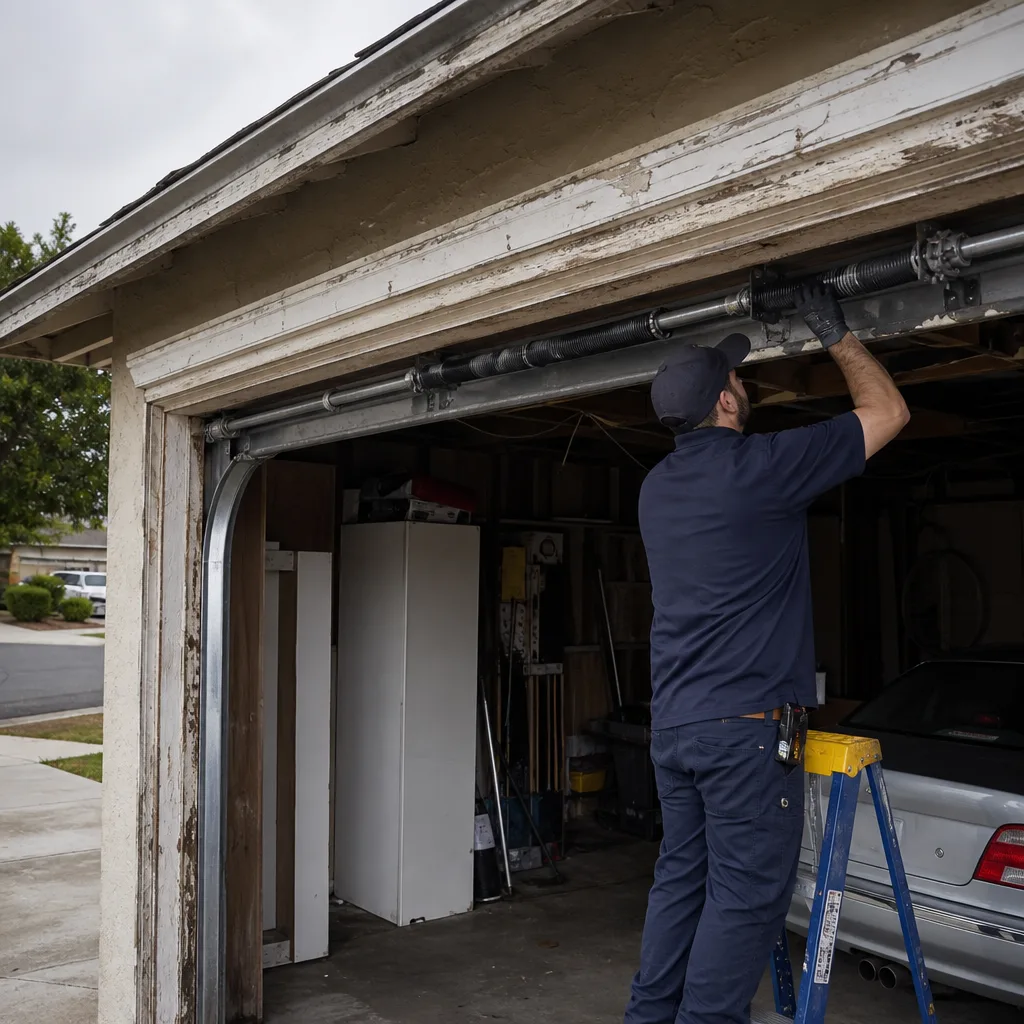
Cables wind and unwind around a drum at the top of the door as it opens and closes. When a cable frays or snaps, the door goes out of balance and may slam shut or hang crooked in the track. Replacing a cable requires releasing the torsion spring tension first, which returns us to the core hazard. Even with the spring unwound, cable routing around the drum is precise; incorrect winding causes the door to bind or the cable to slip.
Track Realignment and Replacement
Bent or misaligned tracks cause rollers to bind, pop out, or chew through the track wall. Realignment requires checking plumb and level at multiple points, loosening and repositioning track brackets, and verifying the door’s travel path without binding. A track that is even slightly out of parallel will destroy rollers and eventually damage the door panels. In Mission Viejo, we see track damage most often after vehicles bump the door frame or after the door has been operated with a broken spring, causing the opener to pull unevenly.
Opener Motor and Gear Repair
Inside a garage door opener, a worm gear drives a sprocket that moves the chain or belt. When the gear strips, usually from door-binding or age, the motor runs but the door does not move. Gear replacement requires disassembling the opener housing, correctly indexing the new gear to the limit switches, and reassembling with proper grease application. Most homeowners lack the specific gear kits and the knowledge to set travel limits afterward. For opener issues, garage door opener in Mission Viejo service from a factory-familiar technician protects your investment and ensures safety reverse functions are properly tested.
Panel Replacement and Section Repair
Replacing individual door panels requires releasing spring tension, removing hinges and rollers, and reinstalling with correct hardware torque. Panels must match the existing door’s gauge, profile, and color; even same-manufacturer panels fade differently over years of sun exposure. In Mission Viejo’s strong UV environment, color matching a single replacement panel to a ten-year-old door is often impossible without replacing adjacent sections.
True Cost Comparison: Parts, Tools, and Your Time
The DIY versus professional debate often stalls on sticker price alone. A more honest accounting includes parts, tools you may need to acquire, the value of your time, and the cost of correcting a mistake.
| Task | DIY Parts & Tools | Professional Flat Rate (Mission Viejo) | DIY Time | Pro Time |
|---|---|---|---|---|
| Annual lubrication | $12-18 (lubricant) | $89 (Seasonal Tune-Up) | 45 min | 30 min |
| Sensor alignment | $0 | $95-125 service call | 15-30 min | 15 min |
| Remote programming | $25-45 (remote) | $95-125 + remote | 10 min | 10 min |
| Bottom seal replacement | $25-45 (seal) | $150-225 | 45-60 min | 30 min |
| Torsion spring replacement | $60-120 (spring) + $80-150 (winding bars, vice grips, safety equipment) | $180-340 | 2-4 hours (first attempt) | 45-90 min |
| Cable replacement (pair) | $30-60 (cables) + spring release tools | $160-280 | 2-3 hours | 60 min |
| Opener gear replacement | $25-40 (gear kit) + disassembly tools | $225-375 | 3-5 hours | 90 min |
Consider the torsion spring line carefully. The DIY parts cost of $140-270 approaches or exceeds the professional flat rate of $180-340, before accounting for your time or injury risk. And if you purchase the wrong spring, which is common, you own a non-returnable part and still need the technician.
Our Mainspring Garage Door Co. home pricing is stated upfront before any work begins. No surprises on the bill. For repairs over $250, we currently offer $50 off. Seniors and veterans receive a permanent 5% discount.
The Warranty Traps Most Homeowners Miss
DIY work on a garage door can void warranties you did not know you had, or thought were more generous than they are.
Door panel warranties from manufacturers like Clopay and Amarr typically cover manufacturing defects for 10-15 years, but require professional installation to remain valid. If you replace a hinge, roller, or panel yourself and damage occurs later, the manufacturer may deny coverage based on improper installation.
Opener warranties from LiftMaster, Chamberlain, and Genie generally cover the motor and electronics for 1-5 years depending on model tier. However, the warranty language usually specifies that damage caused by “improper door balance or binding” is excluded. If your DIY spring replacement leaves the door overweight for the opener, and the motor burns out six months later, you may be denied coverage.
Homeowner’s insurance presents another layer. If DIY garage door work causes property damage or injury to a visitor, your insurer may investigate whether the work was performed by a qualified professional. We are not insurance advisors, but we have been called to document professional repairs for claims where DIY work preceded a failure.
The practical rule: keep receipts and documentation for any professional work, and read the installation requirements in your warranty documents before picking up tools. The fine print is binding, and “I didn’t know” is not a recognized warranty defense.
Three Questions to Ask Before You DIY
Before you open that YouTube tutorial, answer these three questions honestly. They will tell you whether the job belongs in your hands or a technician’s.
- Does this task involve releasing or applying tension to a spring or cable? If yes, stop. This is not a learning opportunity; it is a hazard that requires specific tools and training. The $150-300 you might save is not worth a trip to the emergency room or a permanently damaged door.
- Do I already own every tool this job requires, and do I know how to use each one correctly? If you need to buy winding bars, a torque wrench, or a specific socket set, add that cost to your parts cost. If you have never used the tool before, this is not the project to learn on. Garage doors are unforgiving of amateur practice.
- If I make this worse, can I afford the repair and the delay? A botched sensor alignment costs you an hour. A botched spring replacement can destroy the opener, warp the door, and leave your garage unsecured for days while you wait for a technician with a backlog. In Mission Viejo, during Santa Ana wind season or before holiday weekends, same-day availability is not guaranteed.
If you answer “yes” to question one, or “no” to questions two or three, the job belongs to a professional. There is no shame in this. A square deal includes knowing your own limits.
Mission Viejo-Specific Factors: Climate, Codes, and Common Issues
Mission Viejo’s environment and building patterns create specific garage door considerations that generic DIY guides miss.
UV exposure and heat cycling: Mission Viejo averages 280 sunny days annually. South and west-facing garage doors absorb significant thermal energy, accelerating weather seal deterioration and causing steel doors to expand in their tracks. We see more binding and opener strain complaints in July and August than any other months. Lubrication evaporates faster in heat; annual maintenance is not optional here.
Santa Ana winds: The dry, high-velocity winds that blow through Orange County in fall and winter deposit fine dust in tracks and photo-eye lenses. After a wind event, check and clean both before assuming a mechanical failure.
HOA requirements: Many Mission Viejo neighborhoods, particularly the planned communities around Lake Mission Viejo and the hillside developments off Marguerite Parkway, have homeowners associations with specific garage door style and color requirements. DIY panel replacement with a mismatched door can trigger compliance notices. Check your CC&Rs before altering door appearance.
Age of housing stock: Homes built in the 1960s through 1980s, common in central Mission Viejo and near the lake, often have original or near-original garage door hardware. Track brackets may be rusted, springs may be at or beyond cycle life (typically 10,000 cycles, or 7-10 years of average use), and openers may predate modern safety standards. Working on aged hardware without inspecting the full system is risky; a component that looks fine may be near failure.
Local permit requirements: While simple repairs do not require permits in Mission Viejo, full door replacement or structural modification to the opening may. The city follows California Building Code Chapter 10 for door assemblies. If your project involves altering the header, framing, or converting to a different door type, contact the Mission Viejo Building Division before proceeding.
When DIY Mistakes Get Expensive
We have been called to correct DIY work for over four decades. The patterns are consistent, and the costs escalate predictably.
The spring that was “close enough”: A homeowner in the Casta del Sol neighborhood purchased a spring with the same wire diameter but wrong length and IPPT rating. The door was overweight for the opener, which burned out its motor within three months. Total cost: spring ($85), opener replacement ($450), plus our service to install the correct spring ($220). The original professional spring replacement would have been $280.
The cable routed backward: A homeowner in the Pacific Hills area replaced cables successfully but wound them on the drum in reverse orientation. The door rose crooked, jammed in the track, and bent two panels. Panel replacement on a discontinued door model required custom fabrication. Total cost exceeded $1,800.
The opener force setting “adjusted”: To compensate for a binding door, a homeowner increased the opener’s down-force setting to maximum. The door crushed a bicycle and damaged the bottom section before the safety reverse engaged, which it did not always do. The opener was a pre-1993 model without photoelectric sensors, legal to operate but not compliant with current safety standards. We replaced the opener with a modern unit featuring force-limiting electronics and mandatory photo-eye protection.
These are not cautionary tales invented for effect. They are specific jobs we have completed in Mission Viejo, and they share a common thread: the homeowner was capable, careful, and trying to save money. The garage door system punished a small error disproportionately because it is a large, heavy, spring-loaded machine, not a household fixture.
Common Mistakes to Avoid
- Using screwdrivers or pliers as winding bar substitutes. Only hardened steel winding bars of the correct diameter belong in a torsion spring winding cone. Any other tool can slip, fracture, or deform under load, releasing unpredictable energy.
- Ignoring the door’s balance after spring work. A properly balanced door stays at any height when disconnected from the opener. If it rises or falls on its own, the spring tension is wrong and the opener will suffer.
- Lubricating the track itself. Rollers need traction to climb the curved portion of the track. Oiled tracks cause slippage and binding. Lubricate hinges, rollers, and bearings, not the track surface.
- Disconnecting the opener without securing the door. A door with a broken spring will slam shut with violent force if released without clamping or supporting it. We have seen this damage vehicles and injure homeowners in Mission Viejo’s hillside neighborhoods where sloped driveways add gravitational acceleration.
- Mixing old and new springs on a dual-spring system. Springs fatigue over cycles. A new spring paired with an old spring creates unequal tension, causing the door to twist in its tracks and damaging panels and hardware.
- Assuming all openers use the same programming sequence. Learn button colors indicate different radio frequencies and security protocols. Using the wrong sequence for your model year can clear all remotes or fail to program the new one.
- Neglecting to test the safety reverse after any adjustment. Federal law since 1993 requires garage door openers to reverse when encountering resistance and to have photoelectric sensors. After any work, test both functions with a solid object, not your body.
When to Call a Professional
Call a trained technician when the task involves springs, cables, tracks, opener internal components, or any situation where the door is stuck in a partially open position, and browse our more guides & resources to stay informed. A door that is open six inches is unsecured; a door that is open six feet is a hazard to vehicles, pets, and people. We answer calls at all hours, including nights, weekends, and holidays, with a live person on the line, not a phone tree or voicemail system.
Mainspring Garage Door Co. offers free estimates in Mission Viejo. If you are uncertain whether a task is DIY-appropriate, call us at (562) 262-6410 and describe what you are seeing. We will tell you honestly whether it is a job for your toolbox or ours. No charge for the conversation, and no pressure to book. We have been serving this community since 1984, and we plan to be here when you need us again.
Frequently Asked Questions
Professional torsion spring replacement in Mission Viejo typically runs $180-340 for a standard residential door, including parts, labor, and adjustment. The price varies with door size, spring type, and whether one or both springs need replacement. We state the flat price before any work begins, and our current $50 off any repair over $250 applies. Call (562) 262-6410 for an exact quote; estimates are free.
You should not. Even if only one spring is broken, dual-spring systems require matched pairs for balanced tension. A new spring with an old spring creates uneven pull that damages the door, opener, and remaining hardware. This is one of the most common DIY errors we correct in Mission Viejo homes.
No. At Mainspring Garage Door Co., the price we quote is the price you pay. We diagnose over the phone or in person, state the flat rate before starting work, and put our 90-Day Done Right Promise in writing on every job. If we discover additional issues during service, we stop and explain before proceeding. No surprises on the bill.
Yes. Our technicians arrive with springs, cables, rollers, hinges, and openers from major brands including LiftMaster, Chamberlain, Genie, and Clopay. Most repairs are completed in a single visit. We stock the common spring sizes and hardware for Mission Viejo’s prevalent door configurations, including the Amarr and Clopay models found in local tract developments.
If the door is stuck partially open, makes loud grinding or banging sounds, has visible frayed cables, or a gap in the torsion spring coil, stop and call a professional. These indicate failed or failing components under tension. In our experience across Mission Viejo neighborhoods from Lake Mission Viejo to Pacific Hills, these symptoms predict imminent complete failure and potential injury.
Often yes, for both door and opener warranties. Manufacturer warranties typically require professional installation for coverage to remain valid, and damage caused by improper balance or binding is commonly excluded from opener warranties. Keep documentation of all professional work, and read your warranty’s installation requirements before attempting repairs yourself.
The Bottom Line
The DIY versus professional question is not primarily about cost. It is about accurately assessing risk, tooling, and the consequences of error. Lubrication, sensor alignment, remote programming, and weather seal replacement are genuinely DIY-appropriate for most Mission Viejo homeowners. Torsion spring replacement, cable work, track realignment, and opener internal repairs are not. The physics of stored mechanical energy makes certain tasks categorically different from other home repairs. Know your limits, own the right tools before starting, and ask yourself whether you can afford the repair if you make it worse. When in doubt, a free estimate from a trained technician costs nothing and may save significantly. We have been here since 1984, and we stand behind every job in writing.
Written by Carl Dutton, Owner at Mainspring Garage Door Co., serving Mission Viejo since 2016.