
Last updated September 10, 2026
Full 25-point door and opener safety check with every visit - springs, cables, rollers, tracks, and your LiftMaster or Chamberlain opener included
You get a price before we start. It does not change when the truck arrives.
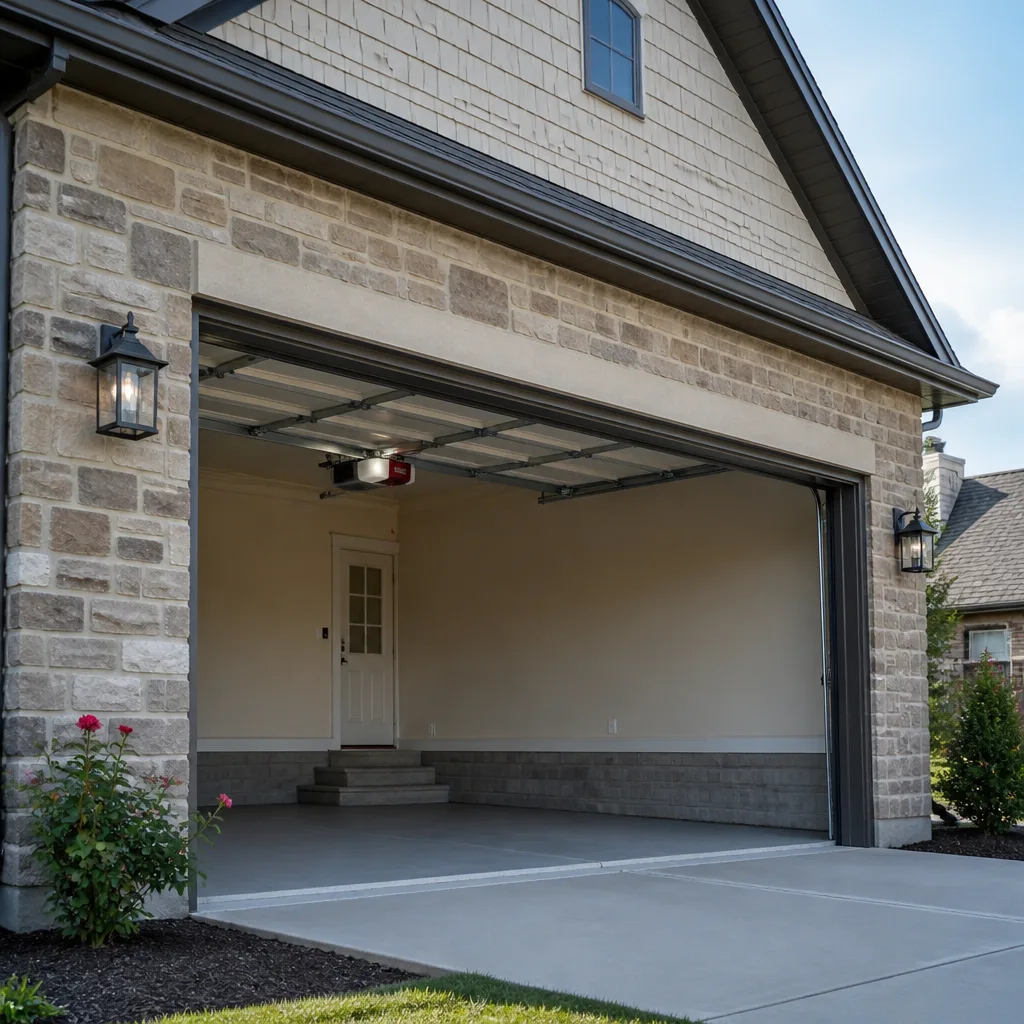
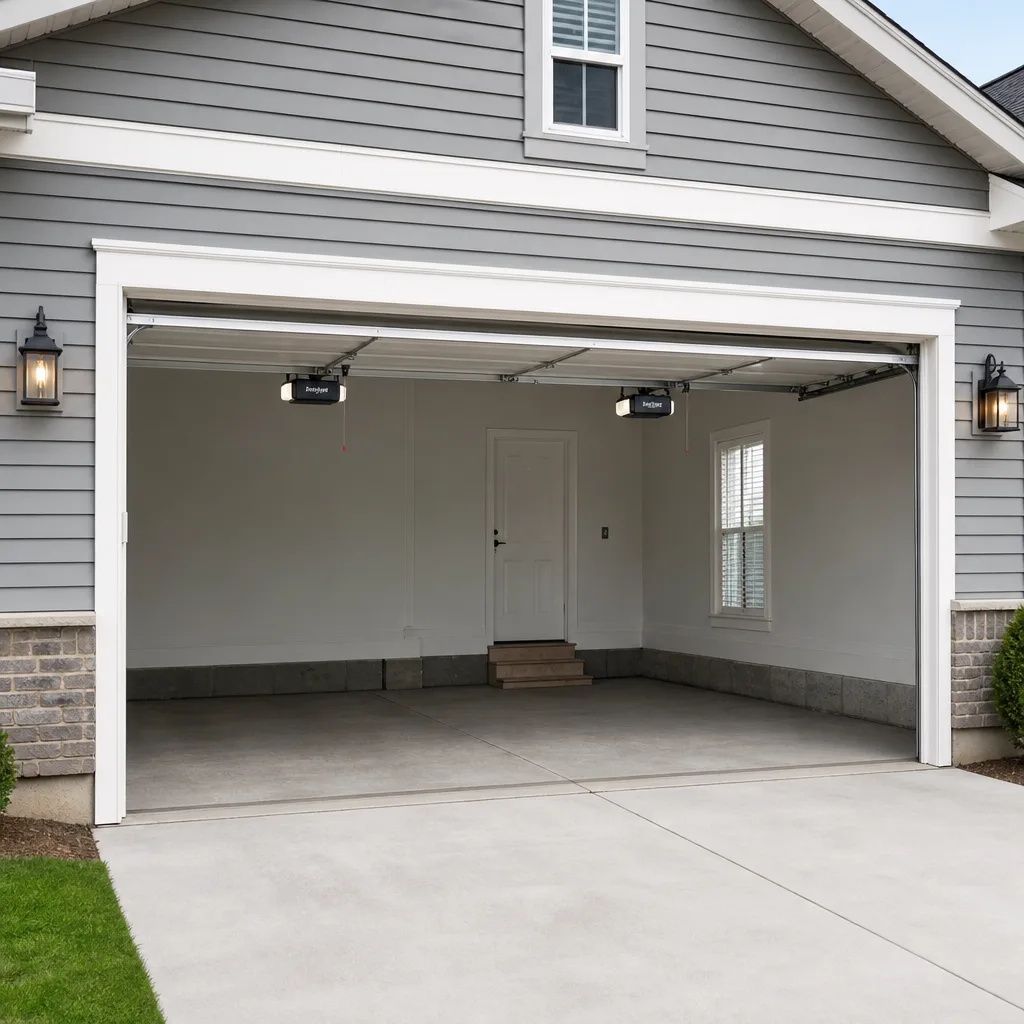
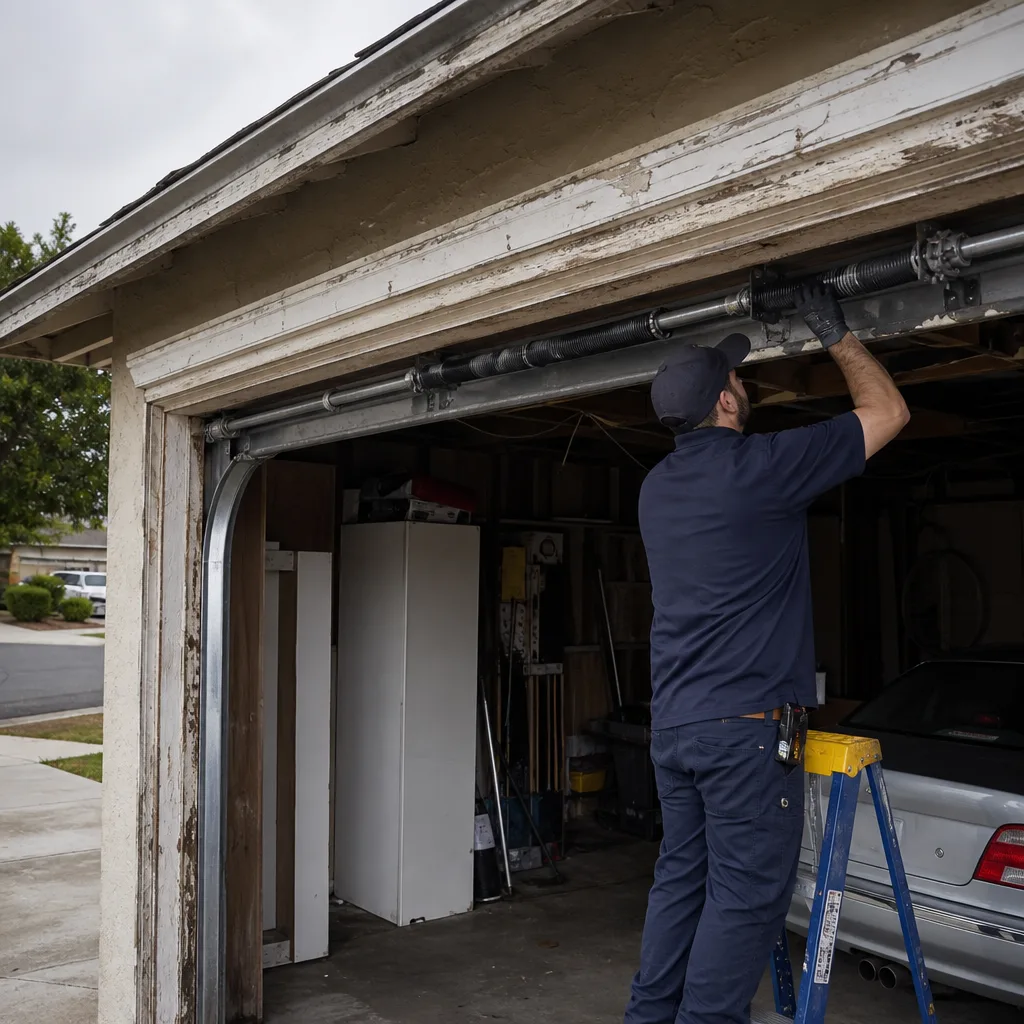 Before
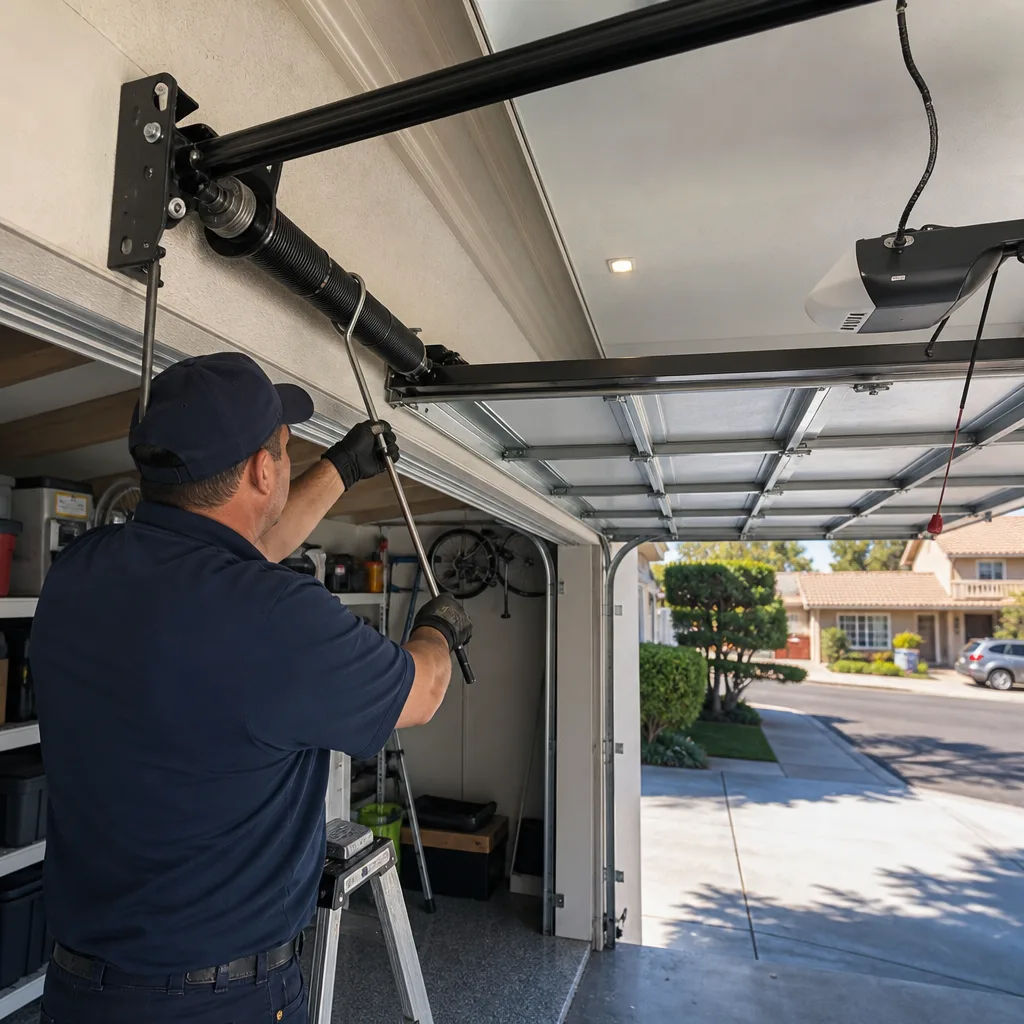 After
After Before
 After
After Before
 After
AfterGarage Door Warning Signs: A Mission Viejo Homeowner’s Reference Guide
A broken torsion spring doesn’t snap without warning. For the three weeks before it fails, it sends signals most homeowners in Mission Viejo have seen but not recognized: a door that drifts six inches after closing, a sharp pop at the top of the cycle, a motor that runs three seconds longer than it used to. These are not quirks of an aging system. They are measurable, predictable precursors to failure, and learning to read them is the difference between a $150 scheduled repair and a $900 emergency call with your car trapped in the garage.
In this guide, we’ll walk through the specific sounds, movements, and visual changes that precede the six most common garage door failures, building on our complete guide to garage door in Mission Viejo. You’ll learn which signals mean “schedule soon” and which mean “stop using the door today.” Everything here comes from four decades of service calls across Orange County, including the particular wear patterns we see in Mission Viejo’s inland climate.
Quick Answer
The most critical garage door warning signs are: a door that won’t stay closed or drifts from level, a loud pop or snap during operation, grinding or squealing that persists after lubrication, gaps or cracks in the door panels, and an opener that struggles, reverses, or runs longer than before. These symptoms indicate specific component failures, most of which develop over 30-90 days. A door that hangs crooked, has a frayed cable, or shows a visible gap in the spring assembly should not be operated until inspected.
Table of Contents
- Sound-Based Warning Signs: What Each Noise Means
- Visual Cues on the Door Panel Itself
- Opener Behavior Changes That Signal Mechanical Load Problems
- The One Ground-Level Visual Check Every Homeowner Should Know
- Triage Framework: Schedule Soon vs. Stop Using Today
- How Mission Viejo’s Climate Accelerates Specific Wear Patterns
- Common Mistakes to Avoid
- When to Call a Professional
- Frequently Asked Questions
Sound-Based Warning Signs: What Each Noise Means
Garage doors make noise. The question is which noise, at what point in the cycle, and whether it’s new. We’ve found that homeowners who describe sounds accurately over the phone get faster, more precise repairs because the technician arrives with the right part already on the truck.
The Sharp Pop at the Top of the Cycle
A single, crisp pop as the door passes the horizontal track and begins its vertical descent usually indicates a torsion spring that’s slipping on the shaft or a winding cone that’s backing out. In Mission Viejo, we see this frequently on doors installed in the 1990s building boom, where original springs are now past their rated cycle life of 10,000 cycles. The pop is the spring momentarily binding, then releasing. It will get louder for two to four weeks, then the spring will snap.
What to do: Stop using the door and call for inspection. A slipping spring can shift suddenly and unbalance the door, causing it to drop or jam.
Grinding That Persists After Lubrication
A metallic grinding during operation, especially in the lower third of the travel, points to worn rollers or a failing bearing in the bottom fixture. Homeowners often spray white lithium grease on the track and are surprised when the grinding continues. That’s because the noise comes from the roller bearing itself, not from friction against the track. The roller is grinding its own internal race.
Standard steel rollers last roughly 12-15 years in Mission Viejo’s dry climate. Nylon rollers with sealed bearings run quieter and longer, but when they fail, they fail silently until the roller wobbles visibly. If you hear grinding, the steel roller is telling you it’s done.
Squealing That Worsens in Morning or Evening
Temperature-sensitive squealing, loudest when the door hasn’t been used for hours, indicates dried or hardened rollers, hinges, or bearing plates. In Mission Viejo, where overnight lows can drop to the mid-40s in winter and daily swings reach 25 degrees, thermal cycling accelerates grease breakdown, which is why seasonal garage door care for Mission Viejo matters year-round. The squeal is metal-on-metal contact that lubrication will temporarily fix but not cure.
If lubrication quiets the noise for less than two weeks, the component has reached end of life. Continuing to lubricate a worn hinge or roller just masks the wear until the part fails completely.
The Thud or Clunk at the Bottom
A heavy thud as the door reaches the closed position means the spring system is no longer carrying the door’s full weight. The door is falling the last inch or two instead of being lowered. This is often the first sign of a broken spring in a dual-spring system, where one spring has failed and the second is compensating. The remaining spring is now overloaded and will fail soon.
In Mission Viejo’s Canyon Crest and Pacific Hills neighborhoods, where many homes have 16-foot wide doors with two torsion springs, we’ve responded to dozens of calls where the homeowner heard the thud for weeks but didn’t realize one spring had already failed.
Continuous Motor Hum Without Door Movement
A humming opener that doesn’t move the door usually means the opener is trying to lift more weight than its rated capacity, or the door is mechanically jammed. The motor is drawing current but cannot overcome the load. This will burn out the opener’s logic board or strip the nylon gears if continued.
Safety note: If your opener hums and the door doesn’t move, do not press the button repeatedly. Disconnect the opener using the red emergency release cord and operate the door manually only if it moves freely with light pressure. If it feels heavy or jammed, leave it disconnected and call for service.
Visual Cues on the Door Panel Itself
Most homeowners inspect their garage door once a year, if that. But the panel itself tells a structural story that predicts failure before it happens. These are not cosmetic issues. They are stress indicators that reveal how the door’s weight is being distributed, and where that distribution has gone wrong.
Stress Cracks at Panel Junctions
Steel doors develop hairline cracks at the junction between panels, typically on the interior face where the horizontal reinforcement ribs meet the panel skin. These cracks run parallel to the rib, not across it, and indicate the door is flexing more than designed during opening and closing. The cause is usually a spring system that’s weak or unbalanced, forcing the opener to pull unevenly.
On Clopay and Amarr doors common in Mission Viejo’s 1980s and 1990s subdivisions, we see this pattern on the top panel first because that’s where the opener arm attaches and where the pulling force concentrates. A crack longer than two inches, or one that has begun to rust at its edges, means the panel’s structural integrity is compromised.
Corner Separation and Hinge Plate Pull-Through
The corners of steel door panels are where the hinge plates attach with four screws. Over thousands of cycles, the screws can wallow out their holes, especially if the door has ever been operated with a broken spring or unbalanced load. The hinge plate pulls away from the panel, creating a visible gap or a “pulled-through” screw head.
This is dangerous because the hinge is what keeps the door aligned in the track. A separated hinge can allow the door to rack sideways, jump the track, or drop a panel. In our experience across Mission Viejo, this failure mode is most common on doors that have had one spring replaced but not the other, creating unequal tension that concentrates stress on one side.
Panel Bowing or Dimpling
A steel door panel that bows inward between reinforcement ribs, or shows a dimple that wasn’t there when installed, has suffered impact or has had its internal bracing fail. In Mission Viejo, where basketball hoops mount above garage doors in many driveways, we’ve replaced dozens of panels where a ball strike created a weak point that worsened over years of cycling.
More critically, bowing can indicate that the door’s internal struts have corroded or separated. Struts are the horizontal steel bars inside the door that prevent panel flex. When they fail, the door flexes excessively, stressing hinges, rollers, and the opener. A door that visibly bows during operation needs immediate inspection.
Bottom Rubber Seal Deformation
The rubber seal at the bottom of the door does more than keep out weather. It provides a cushioning stop and helps the door seal squarely against the concrete. When the seal is compressed unevenly, thicker on one side than the other, it reveals that the door is not closing level. One side is hitting the ground first and compressing the seal, while the other side lands with a gap.
This is one of the most reliable early indicators of spring imbalance. In Mission Viejo’s variable clay soils, where foundation settling is common in hillside areas like Casta del Sol, homeowners sometimes mistake door-level issues for foundation issues. The distinction matters: foundation settling affects the whole frame, while spring imbalance affects only the door’s resting position.
Opener Behavior Changes That Signal Mechanical Load Problems
Modern garage door openers are sophisticated load-sensing devices, even the basic chain-drive models. When the mechanical load on the door changes, the opener’s behavior changes in measurable ways. These changes precede component failure and are often the first thing a attentive homeowner notices.
Increased Cycle Time
Time your door from fully closed to fully open. A standard 7-foot door with a ½-horsepower opener should take 12-15 seconds. If that time has gradually increased to 18-22 seconds, the opener is working against increased resistance. The cause is usually weakening springs, binding rollers, or a door that’s come out of vertical alignment in the tracks.
We’ve documented this specifically on LiftMaster and Chamberlain openers in Mission Viejo’s older neighborhoods, where original equipment is now 20-30 years old. The opener’s motor compensates for load increase by running longer at lower effective speed, but the control board doesn’t register this as a fault until the overload threshold trips.
Reversal on Close
A door that reverses immediately before reaching the floor, or reverses from the fully closed position after touching down, is experiencing excessive resistance in the close direction. The opener’s force sensor interprets this as an obstruction and reverses for safety.
Common causes in Mission Viejo include:
- Track misalignment from settling or impact, common on corner-lot homes where the driveway apron has shifted
- Worn rollers creating drag in the lower track section
- Spring tension that’s too high, pulling the door closed with excessive force
- Debris or corrosion in the track itself, especially near the bottom where sprinkler overspray collects
The safety reversal system is doing its job, but the underlying mechanical problem will worsen until the opener cannot close the door at all.
Motor Housing Heat
Place your hand on the opener motor housing after a complete open-close cycle. It should be warm, not hot. If you cannot keep your hand on the housing for five seconds, the motor is working harder than designed. Sustained overheating degrades the motor windings and will eventually trip the thermal cutoff or fail the motor entirely.
In Mission Viejo’s summer heat, where garage temperatures routinely exceed 95 degrees, an already-overloaded motor fails faster. We’ve replaced more opener motors in August than any other month, and the majority showed signs of gradual overload that the homeowner had not recognized.
Intermittent Remote Response
A remote that works inconsistently, requiring multiple presses or working only from certain angles, is often diagnosed as a battery or interference issue. But if the remote battery is fresh and the issue persists, consider whether the opener is stalling at a specific point in the cycle and not completing its travel. The remote signal is received, the opener attempts to start, detects excessive load, and aborts without the homeowner seeing the brief movement.
This “phantom stall” is particularly common with Genie screw-drive openers as the screw mechanism wears and creates variable resistance. The opener’s logic interprets the stall as a safety event and ignores subsequent commands for a cooldown period.
The One Ground-Level Visual Check Every Homeowner Should Know
There is a single, thirty-second inspection that reveals spring system imbalance before any component fails. We teach this to every homeowner who asks, and it has prevented more emergency calls than any other advice we give.
The Closed-Door Level Test
- Close the door fully using the opener or manual operation.
- Stand inside the garage, facing the door, with your eye level at the bottom of the door.
- Look across the bottom edge where the rubber seal meets the concrete floor.
- Check whether the seal contacts the floor evenly across the full width, or whether a gap appears on one side.
A properly balanced door with healthy springs will sit level and seal evenly. A gap of even ½ inch on one side indicates that the spring on that side is weaker or has failed, allowing that side of the door to rest higher. The gap will worsen over days or weeks as the remaining spring deteriorates.
In Mission Viejo, where many homes have sloped driveways that drain toward the street, homeowners sometimes mistake a door gap for driveway slope. The test: measure the gap at the center of the door versus the edges. A spring imbalance creates a tilted gap, highest at one side and lowest at the other. A sloped driveway creates a consistent gap across the width, or no gap if the slope is away from the door.
What this tells you: A gap that develops over time, especially one that appeared after a loud pop or snap, means one spring has failed or is failing. The door is still operable, but the remaining spring is overloaded and the opener is pulling unevenly. This condition will damage the opener, warp the door, or cause the second spring to fail unexpectedly.
When to act: Any visible gap warrants inspection within a few days. A gap larger than ¾ inch, or a gap accompanied by any popping sound, means stop using the door and call for service.
Triage Framework: Schedule Soon vs. Stop Using Today
Not every warning sign demands immediate emergency response. Some allow for a scheduled appointment within the week. Others mean the door should not be operated until inspected. Misjudging this distinction is how a manageable repair becomes a dangerous situation or a more expensive fix.
Schedule Within the Week
- New squealing or grinding that lubrication quiets for more than two weeks - likely worn rollers or hinges, not yet critical
- Increased cycle time of 3-5 seconds - spring weakening, opener compensating, but not yet overloaded
- Minor seal deformation under ½ inch gap - spring imbalance developing, monitor daily
- Remote inconsistency with no visible door movement issues - may be electrical, but verify mechanically
- Single stress crack under 2 inches with no rust - panel fatigue, schedule before it spreads
Stop Using the Door Today
- Any loud pop or snap followed by changed door behavior - spring failure in progress or complete
- Door that drifts after closing or won’t stay closed - spring system has failed, door is unsafe
- Visible gap in spring assembly - torsion spring broken, extension spring separated, or cable unwound
- Frayed or separated cable - cable failure imminent, door may drop uncontrolled
- Door hangs visibly crooked in tracks - cable or spring failure on one side, high risk of derailment
- Hinge plate pull-through with visible screw gap - door panel connection compromised
- Opener hums, door doesn’t move - mechanical jam or severe overload, continued attempts risk opener damage
The test we use: if you would not feel comfortable standing directly beneath the door while someone else operates it, do not use it. That unease is your intuition recognizing mechanical risk that your conscious mind hasn’t fully processed.
How Mission Viejo’s Climate Accelerates Specific Wear Patterns
Mission Viejo’s inland Orange County location creates wear conditions that differ from coastal cities and deserve specific attention. Understanding these local factors helps explain why a door that lasted twenty years in Huntington Beach may show failure signs in fifteen here, and you can find more guides & resources on our blog.
Thermal Cycling and Metal Fatigue
Mission Viejo sees daily temperature swings of 20-30 degrees year-round, and 40-degree swings in summer when garages heat to 100+ degrees during the day and cool to 60 overnight. Steel springs, tracks, and hardware expand and contract with each cycle. Over ten thousand cycles, this thermal fatigue accelerates micro-crack development in springs and increases wear at hinge and roller contact points.
We’ve observed that torsion springs in Mission Viejo’s uninsulated garages fail 10-15% earlier than rated cycle life, typically at 8,500-9,500 cycles rather than 10,000. Insulated doors and garages with south-facing exposure fare better because temperature swings are moderated.
Low Humidity and Lubrication Breakdown
Relative humidity in Mission Viejo averages 50% lower than coastal Orange County. This dry air doesn’t cause corrosion the way salt air does, but it accelerates grease hardening and evaporation. White lithium grease, the standard lubricant for garage door components, dries to a crust in 18-24 months here versus 3-4 years in more humid climates.
The result is more metal-on-metal contact, more noise, and faster wear - but less visible rust to alert homeowners. A door that looks clean can have internally dry, worn components. We recommend annual lubrication inspection for Mission Viejo homes, with full re-lubrication every two years.
Hillside Construction and Track Alignment
Mission Viejo’s hillside neighborhoods, including areas above Oso Parkway and around Lake Mission Viejo, were built with significant grade variation. Garage slabs were sometimes poured with compensating slopes, and framing adjusted to match. Over decades, this original construction tolerance can shift as soils compact, especially in the clay-heavy soils common to the Saddleback Valley.
Track misalignment from subtle foundation movement is more common in these areas than homeowners realize. The door still operates, but rollers ride against the track edge, creating the grinding noise and accelerated wear that we discussed earlier. Annual track alignment verification is worthwhile for any hillside home over twenty years old.
Sprinkler and Drainage Exposure
Mission Viejo’s municipal water and extensive landscaping means most garage aprons receive regular sprinkler overspray. The bottom section of door, the seal, and the lower track hardware are repeatedly wetted and dried. This causes seal rubber to harden and crack, and creates corrosion at the bottom fixture and cable drum that isn’t present higher on the door.
We see bottom-section failures on Mission Viejo doors at roughly twice the rate of top-section failures, reversing the pattern in drier inland areas. Adjusting sprinkler heads to avoid direct spray, or installing a drip edge, extends bottom component life significantly.
Common Mistakes to Avoid
- Ignoring a new noise because “it’s always been loud.” Garage doors do not naturally get louder with age. New or changed noise always indicates changed mechanical condition. The homeowner who says “it’s always made that sound” often has a spring that’s been broken for months and an opener that’s been overloaded the entire time.
- Applying WD-40 to tracks or rollers. WD-40 is a solvent and light penetrating oil, not a lubricant. It displaces the grease that’s actually needed, attracts dust, and creates a grinding paste within weeks. For garage doors, use white lithium grease on rollers and hinges, silicone spray on the weatherstrip.
- Replacing only one spring on a dual-spring door. This is the most common shortcut we see in Mission Viejo, sometimes from well-meaning handymen, sometimes from homeowners who found a single spring online. Springs are matched sets. An old spring and new spring create unequal tension that damages the door, the opener, and the new spring. We replace both, every time, and warranty the work.
- Testing door balance by disconnecting the opener and lifting manually without knowing what “light pressure” means. A properly balanced door weighs 8-10 pounds and can be lifted with two fingers. If you need both hands or significant effort, the springs are not doing their job. But testing this without understanding the risk - a door that crashes down if the spring fails during your test - is dangerous. We demonstrate this on every service call, but we don’t recommend unsupervised testing.
- Assuming a slow door means the opener is failing and needs replacement. In our experience, 70% of “slow door” calls in Mission Viejo are spring or roller issues, not opener failure. Replacing a $400 opener when a $180 spring repair would have solved the problem is an expensive mistake we see several times each year.
- Continuing to use a door that reverses repeatedly. The safety reversal system is a last resort, not a normal operating mode. Repeated reversal means the door is encountering resistance that will eventually exceed the opener’s capacity or damage the safety sensors. Find and fix the mechanical cause.
- Waiting for “both springs to go” before calling. On dual-spring doors, one spring often fails weeks or months before the second. The door still operates, poorly, and the homeowner delays repair. This overloads the remaining spring, strains the opener, and often warps the door. The second failure typically happens at the worst possible time, with the car inside and a schedule to keep.
When to Call a Professional
Call when any warning sign in the “Stop Using Today” category appears. Call when a new noise or behavior persists for more than two cycles. Call when you’re uncertain which category applies - uncertainty about mechanical safety is itself a signal to get qualified eyes on the problem.
We do not recommend homeowner repair of torsion spring systems, cable replacement, or track realignment. These components operate under significant tension and can cause serious injury without proper tools and training. A standard torsion spring for a 16-foot wide door stores enough energy to lift 150 pounds; releasing that energy unexpectedly is dangerous.
For inspection, diagnosis, and repair in Mission Viejo, Mainspring Garage Door Co. offers free estimates - call (562) 262-6410. Our technicians arrive with springs, cables, rollers, and openers on the truck, so most jobs are completed in a single visit. The price is stated before any work begins, and every job is covered by our 90-Day Done Right Promise in writing.
Frequently Asked Questions
Standard torsion spring replacement for a residential door in Mission Viejo typically runs $180-$340, depending on door size, spring type, and whether one or both springs need replacement. We quote the exact price after inspection, before any work starts, and we do not charge separately for service calls when repair is performed. Call (562) 262-6410 for a free estimate - we’ll ask your door size and symptoms over the phone and give you a narrow range so there are no surprises.
No. Springs fail progressively, though the final fracture can seem sudden if the early signs were missed. For two to six weeks before failure, most springs produce a popping sound, cause the door to drift from level, or create visible gaps in the coil windings. The homeowner who knows these signs can schedule replacement before the emergency occurs.
The opener’s close-force setting is detecting excessive resistance as the door seats, or the travel limit is set incorrectly so the motor continues to run after the door is fully closed. Both conditions are adjustable, but the underlying cause matters: excessive resistance often means spring imbalance, track misalignment, or worn rollers that need mechanical repair, not just adjustment. We inspect the full system before adjusting limits, because masking a mechanical problem with electronic adjustment leads to bigger failures.
Every two years for standard residential use, annually for doors cycled more than four times daily or for homes in hillside areas where track alignment is more susceptible to settling. Our $89 Seasonal Tune-Up includes spring tension verification, roller and hinge inspection, track alignment check, opener force and limit testing, and full lubrication. For most Mission Viejo homeowners, this every-two-year service prevents the emergency calls that cost three to five times as much.
A single broken spring on a dual-spring door can sometimes be lifted manually if the door is lightweight and the homeowner is physically capable, but we do not recommend it. The door will feel heavy, may not stay open, and can drop unexpectedly. A door with a single torsion spring or broken extension springs should not be operated manually - the full weight is uncontrolled and dangerous. Our 24/7 live answer line can dispatch a technician for same-day spring replacement in Mission Viejo.
No. Our price is quoted and agreed before work begins. If inspection reveals additional issues not described over the phone, we explain them, quote the additional work separately, and obtain your approval before proceeding. There are no surprises on the bill. This is part of our 90-Day Done Right Promise, stated in writing on every job.
Yes. Our trucks are stocked with springs, cables, rollers, hinges, and openers compatible with LiftMaster, Chamberlain, Genie, Clopay, Amarr, Wayne Dalton, Craftsman, and Raynor - the brands we see most often in Mission Viejo homes. Most repairs are completed in a single visit without waiting for parts. If your door or opener is an unusual model, we’ll tell you before dispatching and confirm we have the specific part in stock.
The Bottom Line
Garage door failures are rarely sudden. They announce themselves through specific, learnable signals: the pop of a slipping spring, the grind of a worn roller, the drift of an unbalanced door, the heat of an overloaded opener. The homeowner who reads these signs accurately gains control over timing and cost, replacing a $180 roller set on their schedule instead of a $900 emergency rebuild on a Saturday evening.
In Mission Viejo’s climate of thermal stress and dry air, these signals appear somewhat earlier than in milder regions. Annual or bi-annual professional inspection catches what homeowner observation misses. And when a warning sign is unclear, a phone call costs nothing - our live answer line is staffed around the clock, including nights, weekends, and holidays, by people who can help you decide whether to schedule or to stop using the door today.
We’ve served this area for over 42 years. We’ve seen what happens when warning signs are heeded, and when they’re dismissed. The difference is usually a few hundred dollars and a quiet afternoon versus a trapped car and an urgent call. The signals are there. This guide helps you read them.
Written by Carl Dutton, Owner at Mainspring Garage Door Co., serving Mission Viejo since 2016.